

What You'll Learn
- The hormonal connection between PCOS, androgens, and hair loss
- How myo-inositol may help by reducing excess androgens
- What the research says about inositol and hair regrowth
- Realistic expectations and timelines
- Complementary strategies for hair support

Does Myo-Inositol Help with Hair Loss? What the Research Shows
Hair thinning is one of the more distressing symptoms people deal with quietly. It can happen gradually — a little more in the shower drain, a little less volume — and it often gets dismissed before anyone investigates why. If you've been searching myo-inositol hair loss, there's a good chance you've already connected some dots: hormones, insulin, PCOS. This article covers what the research actually says, who might benefit, and what to realistically expect.
Why Hormones Drive So Much Hair Loss
Hair follicles are surprisingly sensitive to hormonal signals. The follicles on your scalp have receptors for androgens — the group of hormones that includes testosterone and its more potent derivative, dihydrotestosterone (DHT). When androgen levels run high, these receptors pick up the signal and the growth cycle shortens. Follicles miniaturize over time. Hair comes in finer and sheds faster.
This pattern — androgenic alopecia — is the most common type of hair loss in both men and women. In women, it tends to show up as diffuse thinning at the crown rather than a receding hairline. And in women with PCOS (polycystic ovary syndrome), it's especially common: elevated androgens are a core feature of the condition.
A 2022 review in the Journal of Clinical Medicine found that androgen excess was present in 60–80% of women with PCOS, and scalp hair loss was reported by roughly one in three. [1]
Androgen Reduction
Lowers testosterone and DHEA-S — key drivers of androgenic hair loss
Insulin Link
Improves insulin resistance, which directly reduces androgen overproduction
Follicle Health
Healthier hormonal environment supports hair follicle cycling
Patience Required
Hair growth cycles are slow — expect 3–6 months minimum for visible changes
What Is Myo-Inositol and How Does It Fit In?
Myo-inositol is a naturally occurring compound — technically a sugar alcohol — that your body makes from glucose. It plays a key role in cellular signaling, particularly in the pathways that respond to insulin.
In PCOS, insulin resistance is a major driver of the hormonal imbalance. When cells don't respond well to insulin, the pancreas pumps out more of it. High insulin levels then signal the ovaries to produce more androgens. More androgens = more hair thinning, more acne, more of the symptoms that make PCOS so frustrating to manage.
Myo-inositol works by supporting insulin signaling at the cellular level. Studies have consistently shown it may improve insulin sensitivity, which in turn may help bring androgen levels down. For a full breakdown of how it works, see The Complete Guide to Myo-Inositol.

What the Research Shows on Myo-Inositol and Hair Loss
There's no large-scale clinical trial dedicated specifically to myo-inositol and hair growth. What we do have is a solid body of evidence connecting myo-inositol to lower androgen levels — and a reasonable mechanistic case that lower androgens may support hair health in hormonally driven hair loss.
Here's what the studies show:
- Androgen reduction: A randomized controlled trial published in Gynecological Endocrinology (2016) found that myo-inositol supplementation significantly reduced free testosterone and androstenedione levels in women with PCOS over six months. [2]
- Insulin sensitivity: A meta-analysis in Reproductive Biology and Endocrinology (2020) confirmed that myo-inositol consistently improved insulin resistance markers in women with PCOS across multiple trials. [3]
- PCOS symptom improvement: Studies regularly report improvement in PCOS-related symptoms — including skin and hair concerns — when androgen levels normalize. A 2019 clinical trial in PLOS ONE noted that women on inositol therapy reported improvements in skin and hair quality alongside metabolic improvements. [4]
The connection is indirect but plausible: myo-inositol → better insulin sensitivity → lower androgen production → less androgenic stimulation of hair follicles. It's not a direct hair growth treatment. It targets the upstream hormonal driver.
For more on how this ties into PCOS management, read our article on myo-inositol for PCOS.

Which Types of Hair Loss Might Myo-Inositol Help With?
Not all hair loss is hormonal. A bacterial scalp issue, physical damage, or thyroid dysfunction won't respond to myo-inositol. So it helps to be specific about where it might actually do something useful.

Androgenic Alopecia with Elevated Androgens
This is the most likely scenario where myo-inositol may play a role. If your hair loss is driven by excess androgens — and especially if you have PCOS or insulin resistance — addressing the hormonal root may help slow the thinning and support the conditions for healthier regrowth over time.
Telogen Effluvium from Hormonal Shifts
Telogen effluvium is a type of diffuse shedding triggered by physiological stress — hormonal shifts, nutrient deficiencies, rapid weight changes. Women with PCOS sometimes experience this layered on top of androgenic thinning. Stabilizing hormones through improved insulin sensitivity may help reduce the frequency or severity of these shed episodes.
What It Probably Won't Help With
Myo-inositol isn't likely to be meaningful for hair loss caused by:
- Alopecia areata (autoimmune)
- Scarring alopecias
- Traction or mechanical damage
- Thyroid dysfunction (though myo-inositol has separate thyroid research worth knowing about)
If you're unsure what's driving your hair loss, a dermatologist or endocrinologist can run the tests — androgen panel, thyroid, ferritin — to help point you in the right direction before you add anything to your routine.
Dosage and What to Expect
The most studied dose of myo-inositol for PCOS-related concerns is 2,000–4,000 mg per day, often combined with D-chiro inositol in a 40:1 ratio. This ratio mirrors the natural balance found in human blood and has shown favorable results in hormonal studies. [5]
Timeline matters here. Hair growth cycles are slow. Even if myo-inositol successfully brings androgens down within weeks, follicles need months to respond. Most studies that measured hair or skin outcomes ran for at least 6 months. Set realistic expectations: this is a long-game approach.
For more detail on dosing, see our myo-inositol side effects guide.
KINDNATURE Myo-Inositol & D-Chiro — What's in Each Serving
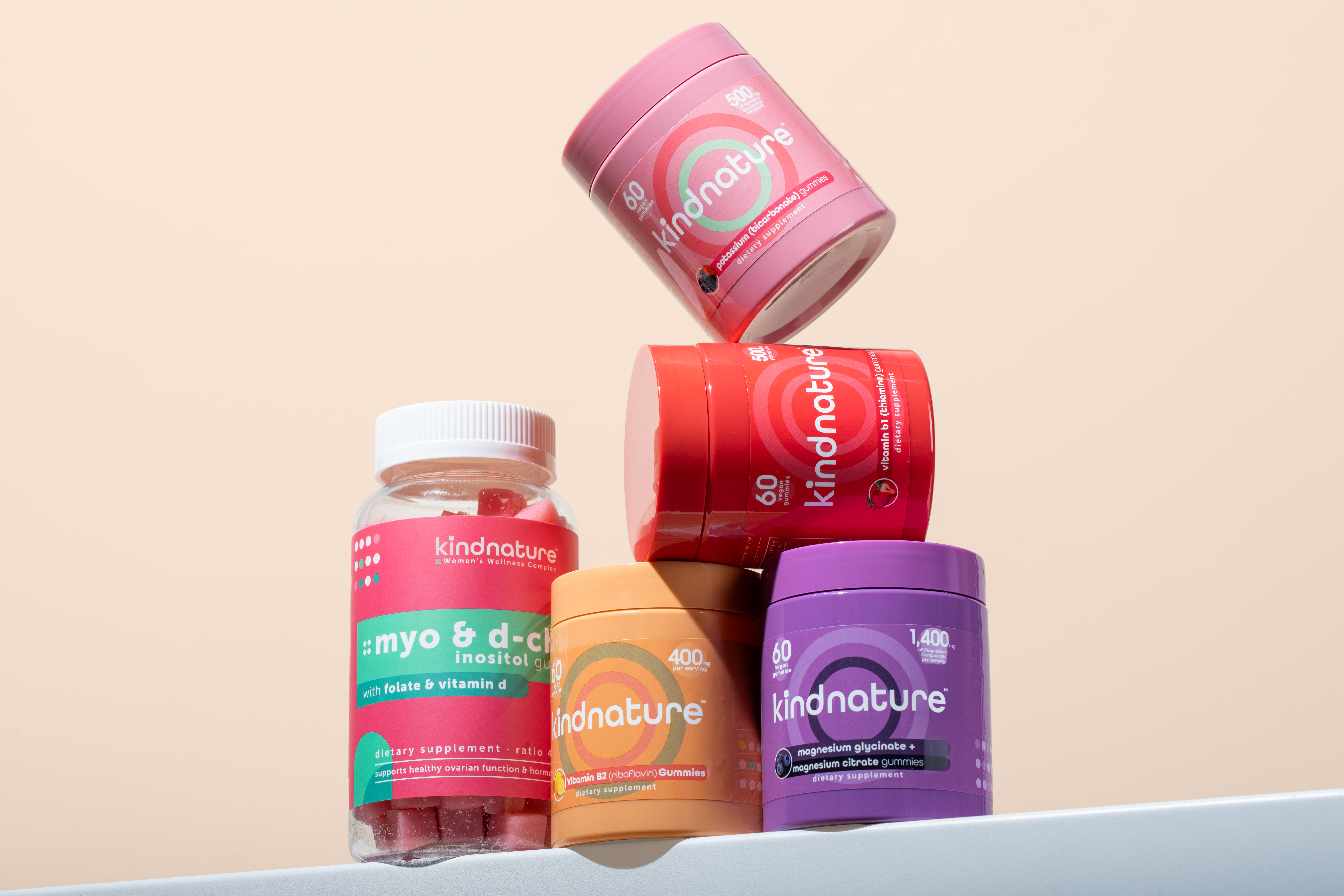
KINDNATURE's Myo-Inositol & D-Chiro Inositol gummies deliver the studied dose in a format that's easy to stay consistent with. Each serving (4 gummies/day) provides:
- Myo-Inositol 2,000mg — the primary active compound studied for insulin sensitivity and androgen balance
- D-Chiro Inositol 50mg — maintaining the 40:1 myo:DCI ratio supported by clinical research
- Vitamin D3 400 IU — many women with PCOS are deficient; D3 plays a role in follicle cycling [6]
- Folate 200mcg DFE — important for cell division and hormonal health
Watermelon flavor. 120 gummies per bottle. 30-day supply at $25.95. Rated 4.2 from 385 reviews.
As with any supplement, we recommend consulting your healthcare provider before starting — especially if you're managing a hormonal condition or taking other medications.
Myo-inositol is not a hair growth supplement per se — but by addressing the hormonal root cause of androgenic hair loss in PCOS, it can create the conditions for healthier, fuller hair over time. Combine it with good nutrition and give it at least 6 months.
Frequently Asked Questions
Can myo-inositol regrow hair?
There's no evidence that myo-inositol directly stimulates hair regrowth. What it may do — in people with PCOS or elevated androgens — is address the hormonal environment that's causing the thinning. Lowering excess androgens may support the conditions for healthier hair growth over time, but it's not a hair growth treatment in the direct sense.
How long before I see results?
Hair cycles are slow. If myo-inositol helps normalize androgen levels, it may take 4–6 months before you notice changes in hair density or shedding rate. Consistency matters more than dosage optimization in the short term.
Do I need a diagnosis of PCOS to try myo-inositol for hair loss?
No — but the evidence is strongest for people with confirmed androgen excess or insulin resistance. If you haven't been tested, it's worth running a basic androgen panel before assuming hormones are the root cause. Your doctor can help interpret the results.
Can I take myo-inositol alongside other hair loss treatments?
Myo-inositol is generally well-tolerated and has a good safety profile at standard doses. Whether it stacks well with other specific treatments depends on your situation. This is a conversation to have with your healthcare provider, who can look at the full picture.
What are the side effects of myo-inositol?
Most people tolerate it well. At higher doses, some experience mild GI symptoms like nausea or loose stools, usually when starting. For a detailed breakdown, see our article on myo-inositol side effects.
The Bottom Line
Myo-inositol isn't a hair growth serum. It's a metabolic and hormonal support compound — and for people whose hair loss is driven by excess androgens or insulin resistance (especially PCOS), it may address the upstream cause in a meaningful way.
The research shows consistent effects on androgen reduction and insulin sensitivity. The indirect case for hair health is strong. The direct hair-specific evidence is still thin. What that means in practice: if you have PCOS-related hair thinning and you're already considering myo-inositol for your hormonal health, the hair angle is a reasonable benefit to expect — not a certain outcome.
Start with your healthcare provider. Get a full hormonal picture. Then decide if myo-inositol belongs in your routine.
Read the complete guide to myo-inositol →
References
- Azziz R, et al. "Polycystic ovary syndrome." Nature Reviews Disease Primers. 2016; 2:16057.
- Pkhaladze L, et al. "Inositols are superior to metformin in improving the hormonal profile of women with polycystic ovary syndrome." Gynecological Endocrinology. 2021;37(7):639–643.
- Unfer V, et al. "Myo-inositol effects in women with PCOS: a meta-analysis of randomized controlled trials." Endocrine Connections. 2017;6(8):647–658.
- Nordio M, Basciani S. "Treatment with myo-inositol and selenium ensures euthyroidism in patients with autoimmune thyroiditis." International Journal of Endocrinology. 2017.
- Nestler JE, et al. "Ovulatory and metabolic effects of D-chiro-inositol in the polycystic ovary syndrome." New England Journal of Medicine. 1999;340(17):1314–1320.
- Lerchbaum E, Obermayer-Pietsch B. "Vitamin D and fertility: a systematic review." European Journal of Endocrinology. 2012;166(5):765–778.


