

What You'll Learn
- How riboflavin supports skin cell turnover and repair
- The connection between B2 deficiency and skin problems
- Research on riboflavin for acne, dermatitis, and wound healing
- Optimal dosing for skin health
- Complementary nutrients that work with B2
When it comes to achieving healthy, radiant skin, most people think of vitamin C serums or retinol. But there's a lesser-known B vitamin quietly doing essential work behind the scenes. Vitamin B2 for skin health is one of the most underappreciated nutritional strategies available — and the research is starting to catch up. Riboflavin, as it's formally known, plays a direct role in cellular energy production, antioxidant defense, and the metabolic processes that keep your skin looking its best.
In this guide, we'll break down exactly what vitamin B2 does for your skin, how deficiency can show up on your face and body, and how much you actually need to see a difference.
What Does Vitamin B2 Do for Your Skin?
Riboflavin is a water-soluble vitamin that your body uses as a building block for two critical coenzymes: flavin mononucleotide (FMN) and flavin adenine dinucleotide (FAD). These coenzymes are involved in over 100 enzymatic reactions throughout the body — many of which directly affect skin health.
Collagen Production Support
Collagen is the structural protein that keeps skin firm, plump, and elastic. Your body needs adequate riboflavin to support the enzymatic pathways involved in collagen synthesis. Research published in the Journal of Clinical Biochemistry and Nutrition has shown that B2 status is associated with connective tissue integrity, including the collagen matrix in skin (PMID: 20885866). Without sufficient riboflavin, these pathways may slow down, potentially contributing to premature signs of skin aging.
Glutathione and Antioxidant Activity
One of riboflavin's most important roles is supporting glutathione — often called the body's "master antioxidant." FAD, the coenzyme derived from B2, is required by glutathione reductase, the enzyme that regenerates glutathione from its oxidized form. A 2012 study in Nutrition Reviews confirmed that riboflavin deficiency impairs glutathione recycling, leaving cells more vulnerable to oxidative damage (PMID: 23134017). For skin, this means less protection against UV-induced free radicals, environmental pollutants, and the oxidative stress that accelerates aging.
Cellular Energy for Skin Turnover
Skin cells are among the fastest-dividing cells in the body, replacing themselves roughly every 28 days. This constant turnover demands significant cellular energy. Riboflavin's coenzymes FMN and FAD are essential components of the electron transport chain — the primary pathway your mitochondria use to produce ATP (cellular fuel). When B2 levels are adequate, skin cells have the energy they need to divide, repair damage, and maintain a healthy surface layer.

Cell Turnover
FAD and FMN drive the cellular energy needed for healthy skin regeneration
Antioxidant Defense
Supports glutathione recycling to protect skin from oxidative damage
Moisture Barrier
Helps maintain mucous membrane integrity and skin hydration
Collagen Support
Indirectly supports collagen synthesis through its role in cellular metabolism
- Adult women: 1.1 mg/day
- Adult men: 1.3 mg/day
- Pregnant women: 1.4 mg/day
- Breastfeeding women: 1.6 mg/day
However, the RDA represents the minimum needed to prevent deficiency — not necessarily the amount for optimal skin health. Many practitioners and researchers have explored higher-dose riboflavin supplementation, particularly in the 25–400 mg range, for specific health goals. A landmark study published in Neurology used 400 mg daily for migraine prevention and found it to be well-tolerated with no significant adverse effects (PMID: 9484373). For more on dosing strategies, see our riboflavin dosage guide.
Because riboflavin is water-soluble, excess amounts are excreted in urine (which is why high-dose B2 can turn urine bright yellow — a harmless effect). There is no established upper limit for riboflavin, and toxicity is extremely rare.
Best Food Sources of Riboflavin for Skin Health
A diet rich in riboflavin is the foundation of healthy B2 levels. Here are some of the best dietary sources:
| Food | Serving Size | Riboflavin (mg) | % Daily Value |
|---|---|---|---|
| Beef liver | 3 oz | 2.9 mg | 223% |
| Yogurt (plain) | 1 cup | 0.5 mg | 38% |
| Milk (2%) | 1 cup | 0.5 mg | 38% |
| Eggs | 1 large | 0.3 mg | 23% |
| Almonds | 1 oz | 0.3 mg | 23% |
| Spinach (cooked) | 1/2 cup | 0.2 mg | 15% |
| Fortified cereal | 1 cup | 0.4–1.7 mg | 31–131% |
For a comprehensive list, check out our guide to riboflavin-rich foods.
While food is always the best starting point, many people — especially those on plant-based diets, with digestive conditions, or with higher metabolic demands — find it difficult to consistently reach optimal riboflavin levels through diet alone. That's where a quality B2 supplement can make a meaningful difference.

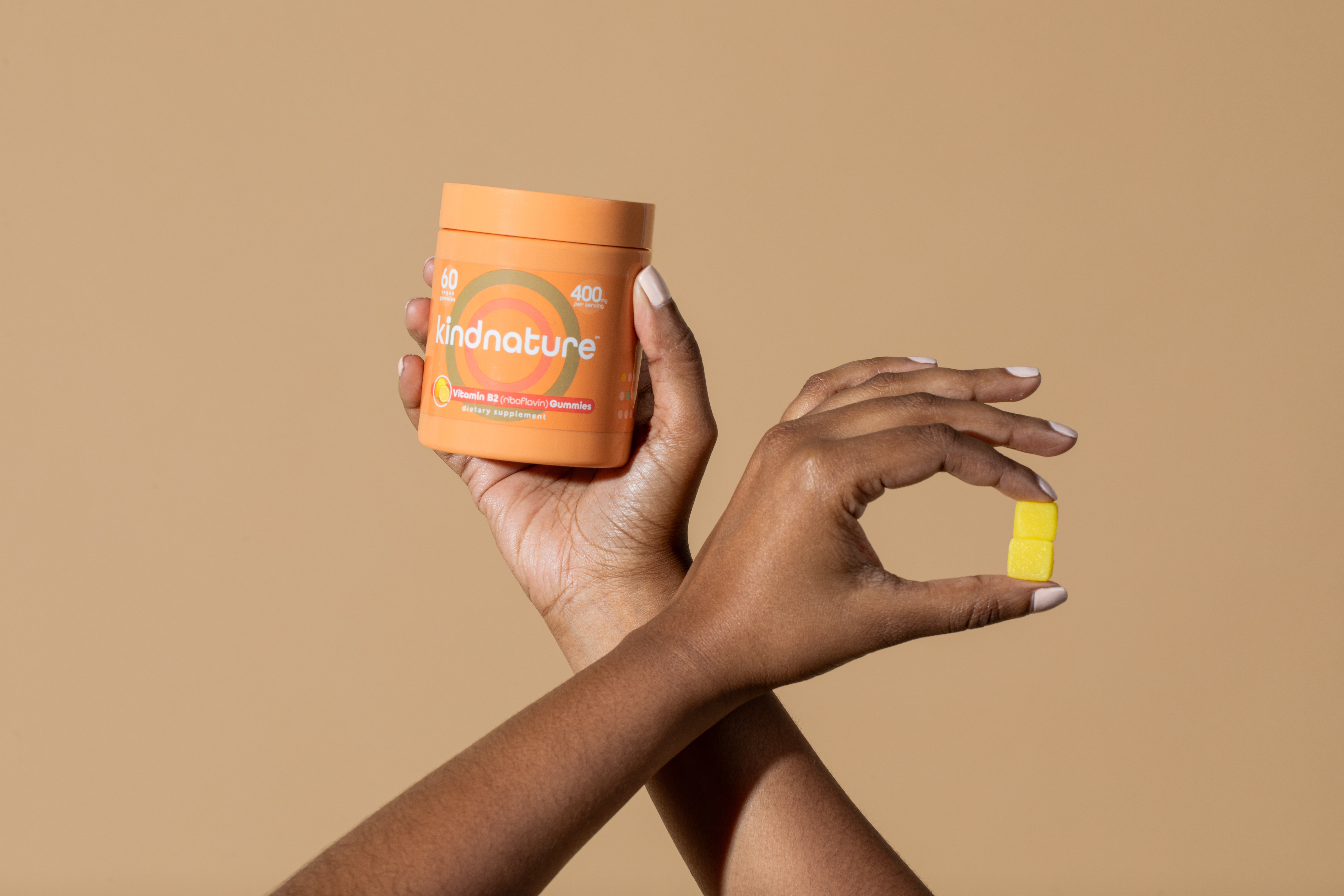
KINDNATURE Vitamin B2 Riboflavin 400mg delivers a clinically relevant dose in a lemon-flavored gummy — no pills to swallow, no aftertaste. Each bottle contains 60 gummies at $21.95, and it's earned a 4.7-star rating from 797+ reviews. The 400 mg dose matches what's been used in clinical research, giving you flexibility to support your skin health goals alongside a balanced diet.
Vitamin B2 vs Other B Vitamins for Skin
The B-vitamin family includes several members with skin-related benefits. Here's how riboflavin compares:
Vitamin B2 (Riboflavin) vs Vitamin B3 (Niacinamide): Niacinamide has become a popular topical skincare ingredient for reducing redness and supporting the skin barrier. But here's the connection most people miss — your body needs riboflavin to convert tryptophan into niacin. Without adequate B2, your B3 status may also suffer. They work together, not in competition.
Vitamin B2 vs Vitamin B5 (Pantothenic Acid): Pantothenic acid is often touted for wound healing and skin moisture. Riboflavin supports a different angle — the antioxidant defense and energy production that keep skin cells healthy in the first place. Both are important, but B2's role in glutathione recycling gives it a unique edge in oxidative protection.
Vitamin B2 vs Vitamin B7 (Biotin): Biotin gets most of the attention for "hair, skin, and nails," but the scientific evidence for biotin's skin benefits in people without deficiency is actually quite limited. Riboflavin, by contrast, has well-documented effects on skin health through its role in cellular energy, antioxidant activity, and lipid metabolism. If you're choosing between the two for skin support specifically, the evidence may favor B2.
For a broader overview of riboflavin's role in the body, see our complete guide to vitamin B2 benefits.
Riboflavin supports skin health from the inside out — powering cellular repair, antioxidant defense, and moisture barrier function. While it will not replace a good skincare routine, ensuring adequate B2 intake is a foundational step for healthy, resilient skin.
Riboflavin and Oily Skin or Acne
If you've ever struggled with excess oil or persistent breakouts, riboflavin may be worth a closer look. Vitamin B2 is involved in the metabolism of fats and lipids, including the sebum your skin produces. Proper fat metabolism helps regulate how much oil your sebaceous glands release.
While no single nutrient is a silver bullet for acne, studies suggest that B-vitamin deficiencies — including riboflavin — may be associated with increased sebum production and skin congestion. A study published in Cutaneous and Ocular Toxicology found that patients with acne vulgaris had significantly lower serum levels of several B vitamins, including B2, compared to controls (PMID: 24131225).
Riboflavin also supports the metabolism of other B vitamins — particularly B6 and niacin (B3) — that are independently linked to skin health. By ensuring your B2 levels are sufficient, you're supporting the broader B-vitamin network that helps keep sebum production in balance.
It's important to note that riboflavin alone is unlikely to resolve severe acne. However, as part of a well-rounded nutritional approach, adequate B2 intake may support healthier oil regulation and a clearer complexion over time.
The Connection Between B2 Deficiency and Skin Issues
Riboflavin deficiency — known clinically as ariboflavinosis — has well-documented skin manifestations. Because your body cannot store large amounts of this water-soluble vitamin, even short periods of inadequate intake can lead to visible changes.
Angular Cheilitis
One of the hallmark signs of B2 deficiency is angular cheilitis: painful cracks and sores at the corners of the mouth. This occurs because the rapidly dividing cells of the oral mucosa and surrounding skin are particularly sensitive to riboflavin status. The American Journal of Clinical Nutrition has identified angular cheilitis as one of the earliest clinical markers of ariboflavinosis (PMID: 14522752).
Seborrheic Dermatitis
Seborrheic dermatitis — characterized by red, flaky, itchy patches on the face, scalp, and chest — is another condition commonly associated with riboflavin deficiency. Research suggests that inadequate B2 disrupts the normal lipid metabolism of sebaceous glands, contributing to the scaly, inflamed patches characteristic of this condition. For a deeper look at all the signs of low B2, see our guide on riboflavin deficiency symptoms.
Generalized Skin Inflammation
Beyond these specific conditions, low riboflavin status is associated with a general increase in skin inflammation and sensitivity. Without adequate glutathione recycling, skin cells are more susceptible to oxidative damage, which can manifest as redness, irritation, and a dull, uneven complexion.

How Much Vitamin B2 Do You Need for Skin Benefits?
The Recommended Dietary Allowance (RDA) for riboflavin is relatively modest:


